Jun 25 2026
Postsecondary Spotlight on Human Connections & AI Tools


June 25, 10:00 am PT, 11:00 am MT, 12:00 am CT, 1:00 pm ET
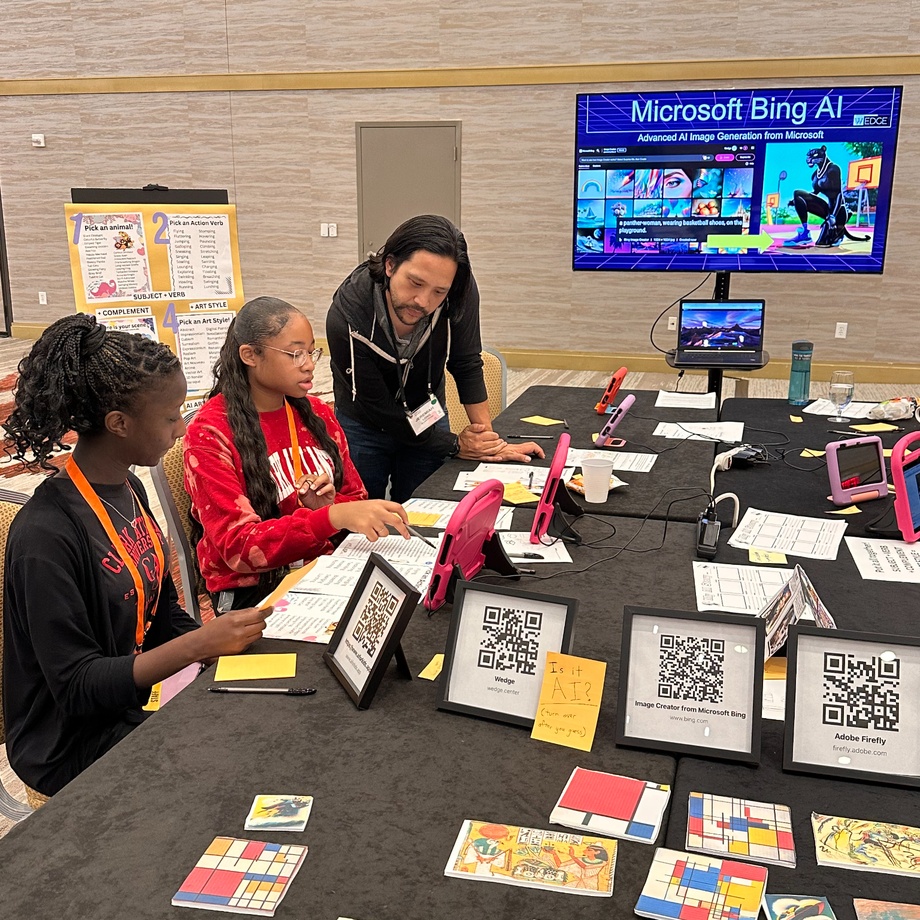
AI is already helping students navigate their college and career journeys with 24/7 access to information, safe spaces to ask embarrassing questions, and faster processes to navigate byzantine paperwork. But education systems need to commit to another dimension of human development: all students need and deserve human support. While that statement may sound obvious, AI tools and strategies are quickly challenging its relevance. This webinar explores philanthropy’s unique role in ensuring that, as AI tools scale, so do students’ networks, particularly for those furthest from opportunity.
This series of three exciting webinars spans a range of impacts that Artificial Intelligence (AI) already has on higher education and how leaders are responding. Join these free, fast-paced Spotlight webinars to learn from panels of experts:
(1) The impacts of AI on CTE pathways and how institutions can adjust to better prepare students;
(2) How advising frameworks are blending AI and that human connections to support learners; and
(3) How funders can come together to ensure AI advances organizational growth while ensuring all communities benefit from ethical AI incorporation.
This event is intended for members and other education grantmakers.
There is no cost to attend this Grantmakers for Education program.
Registration closes 15 minutes prior to the program time. By registering for this program, you agree to our Learning Environment Commitment. Thank you for your patience; we review each registration in advance.
About the Speakers

Will Hanson
Co-Executive Director
Hope Street Group
Will Hanson is Co-Executive Director at Hope Street Group, where he leads the development of AI-powered tools that help students and educators navigate a rapidly changing workforce, ensuring every student is future-ready and equipped for meaningful career pathways. Will is a former educator turned engineer and entrepreneur with a track record of building high-performing teams and products used by millions. At Capital One, he led natural language processing initiatives, rebuilding phone, call analysis, chat, and search systems, generating over $1B in customer service savings. At Intuit, he co-founded their consumer innovation lab, bringing ideas from across the company to market in weeks, including new products like TurboHome and Intuit Data alongside updates to Mint and TurboTax. He also founded Y Combinator-backed Hatchify, an AI-augmented sales platform for physical goods, and Canopy Servicing, a financial ledger powering billions in transactions.

Maurice McCaulley
Program Officer
The Gates Foundation
Maurice is a Program Officer at the Gates Foundation focused on increasing access to high quality advising support to improve student experiences; ultimately helping them discover a path, stay on it, and thrive. Prior to the foundation, he was Senior Manager of College and Career Support with KIPP DC where he worked on dual enrollment initiatives, fostered university partnerships, and piloted AI-enabled chatbot features aimed at nudging students using behavioral science techniques to promote sustainable advising. Maurice’s passion for education includes community advocacy and global education/citizenship. Maurice holds a master’s degree in education from HGSE and a bachelor’s in foreign service from Georgetown University.

Alexandra (Alex) Bernadotte
CEO
Beyond 12
Alexandra (Alex) Bernadotte is the founder and chief executive officer of Beyond 12, a technology-enabled nonprofit that integrates personalized coaching with mobile technology to increase the number of traditionally underserved students who graduate from college and translate their degrees into meaningful employment and choice-filled lives. She has over 18 years of executive management and strategic development experience in the nonprofit and private sectors. Immediately before launching Beyond 12, Alex was an entrepreneur in residence at NewSchools Venture Fund, where she developed the business plan for Beyond 12.
Alex’s previous professional experience includes serving as executive director of The Princeton Review’s Silicon Valley office; executive director of Foundation for a College Education, a nonprofit college access program; co-founder and vice president of marketing at educational travel startup Explorica; director of operations at EF Education; and operations manager at the World Health Organization in Geneva, Switzerland, where she coordinated the efforts of an international youth substance abuse prevention foundation. Alex currently serves on the board of directors of Cengage Group and the board of advisors of the Magnuson Center for Entrepreneurship and the Presidential Commission for Financial Aid at Dartmouth College.
Alex earned her undergraduate degree from Dartmouth and a master’s degree with a concentration in policy and organizational leadership from Stanford. She is an Ashoka Fellow, a recipient of the NewSchools Venture Fund Entrepreneur of the Year award, a Jefferson Award for Public Service winner, a Dartmouth College Social Justice Award and Stanford University Alumni Excellence in Education Award honoree, a Fellow of the Pahara – Aspen Institute Education Fellowship, and a member of the Aspen Global Leadership Network. In addition, Beyond 12 was named one of the world’s ten most innovative education companies by Fast Company.

Julia Freeland Fisher
Director of Education
Clayton Christensen Institute
Julia Freeland Fisher is the Director of Education at the Clayton Christensen Institute, where she leads a team researching the effects of disruptive innovation on the public and private education landscape. She has published and spoken extensively on topics including the EdTech market, new school models, and competency-based education policies and practices. Most recently, her research focuses on emerging tools and practices that leverage technology to expand students’ social capital by enhancing their access to new networks and their ability to navigate those networks.
MORE EVENTS
Grantmakers for Education 2026 Annual Conference
Registration closes October 1! Join us in New York for the 2026 Grantmakers for Education Annual Conference.

The Latest on the Federal Scholarship Tax Credit: Opportunities and Challenges for Public Schools
Join leading experts for a briefing on the latest regulations governing the Trump administration’s federal scholarship tax credit program and...