
The purpose of this playbook is to provide a long-term, comprehensive, and sustainable framework for planning, collaborating, and executing evidence-based practices and partnerships for high-quality summer and out-of-school time (OST) experiences.
Resources
Knowledge begins here
but never ends.
Curated reports, deep research, informational articles, podcasts. Everything you need to stay well
informed in the world of education grantmaking.
2026 IgnitED Award Winners
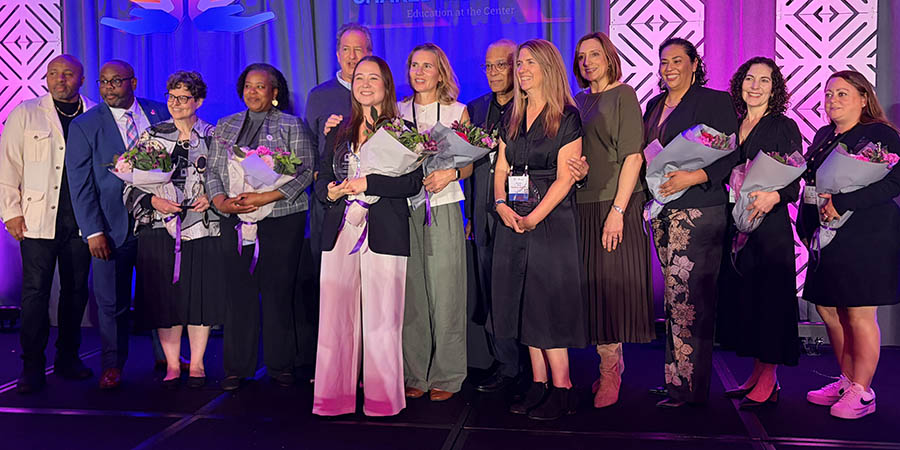
The Grantmakers for Education IgnitED Awards celebrate outstanding leaders who drive bold ideas and innovative thinking in education and philanthropy. Learn more about the 2026 award winners here!
Investing in the Out-of-School Time Workforce: Recommendations for Grantmakers
Member Insights: Education Access Is Under Threat: Philanthropy Can Protect Education for All Children
.
FILTER RESOURCES
SEARCH RESOURCES
August 2020
Characteristics of Preschool Special Education Services and Educators
New research helps fill the information gap on services for preschool children with disabilities. The Individuals with Disabilities Education Act and federal policy guidance support early identification and intervention for young children with disabilities and encourage the use of inclusive settings to serve them.
This report is based on a comprehensive nationwide study on services for children ages 3 to 5 with disabilities. Our experts conducted this research for the U.S. Department of Education’s Institute of Education Sciences to shed light on how young children with disabilities are served. These data can inform researchers, practitioners, and policymakers about the structure of programs for preschool children with disabilities, the prevalence of inclusive settings, use of curricula and interventions, and the characteristics of and supports provided to teaching staff.
August 2020
Summer Learning: A Bridge to Student Success and America’s Recovery, a COVID-19 PLAYBOOK

August 2020
Remaking Tomorrow: Learning in a Post-Pandemic Future
This publication aims to build on the momentum sparked by the COVID-19 pandemic to inspire stakeholders across the greater Pittsburgh region to shape and reshape a future of learning that is just, equitable and learner-centered.
August 2020
Ready to Partner
Learning Heroes, along with National PTA and Univision, created Ready to Partner, a research-based bilingual resource to help parents and teachers join forces as they prepare for a different kind of school year.
August 2020
Police in Schools: A Background Paper
This paper was developed by the American Federation of Teachers and the Education Civil Rights Alliance to be used as a background tool on the issue of police in schools. Includes lesson plan resources.
August 2020
Evaluating a Teen Pregnancy Prevention Program for At-Risk Youth in Alternative Schools
This brief highlights evidence on the impacts of the Teen Choice curriculum for youth in alternative schools in and around New York City.


Submit A Resource
Expand your audience by expanding minds.
We believe in getting research and insights into more hands to support learning for our peers and community. Share your resources that would be useful to education grantmakers.